
Why TLS 1.3 Changed Enterprise Security Visibility
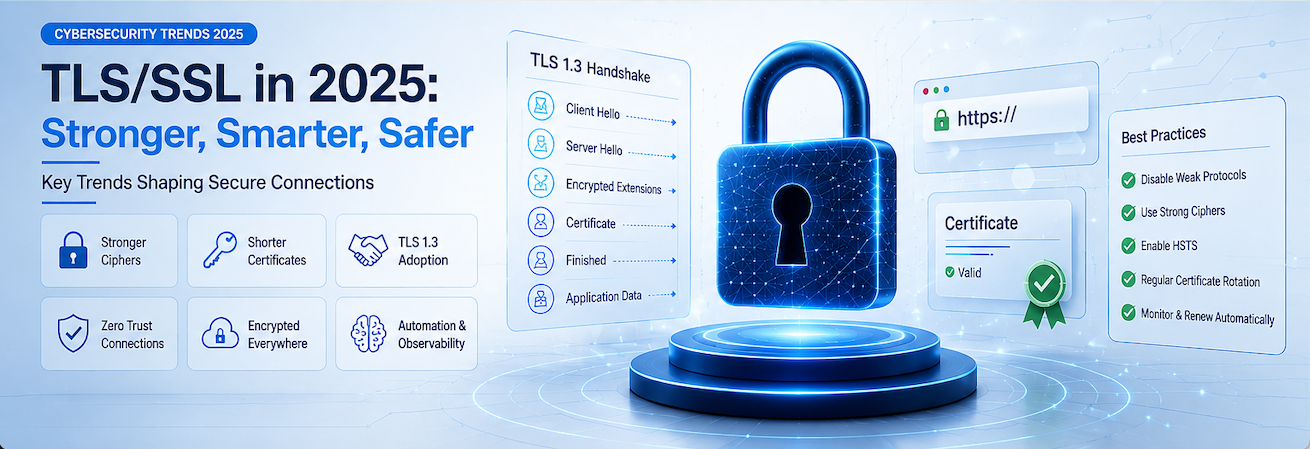
For years, enterprise security architectures relied heavily on traffic inspection.
Then TLS 1.3 changed everything.
The protocol significantly improved privacy and performance, but it also reduced visibility for many traditional security tools.
Why TLS 1.3 Matters
TLS 1.3 introduced:
- Faster handshakes
- Improved encryption
- Reduced legacy crypto
- Better forward secrecy
- Encrypted handshake components
For users, this is excellent.
For security operations, it created new challenges.
The Visibility Problem
Many enterprise security systems depend on inspecting encrypted traffic:
- Malware detection
- Data leakage prevention
- Threat hunting
- URL filtering
- Content inspection
But stronger encryption reduces what can be observed passively.
Why SSL Inspection Became Controversial
Organizations now face a difficult balance:
- Privacy
- Compliance
- Security visibility
- Performance
- User trust
This is why SSL/TLS inspection remains one of the most debated areas in enterprise security.
The Operational Challenge
TLS inspection at scale is expensive.
Especially with:
- High HTTPS traffic volumes
- Modern cipher suites
- API-heavy environments
- HTTP/2 and HTTP/3 adoption
This pushes organizations toward centralized inspection architectures.
The Future
Security vendors increasingly rely on:
- Behavioral analysis
- Metadata correlation
- AI-assisted anomaly detection
- Selective decryption
- Risk-based inspection
Full inspection of all traffic is becoming operationally unrealistic.
Final Thoughts
TLS 1.3 improved the internet.
But it also forced enterprise security teams to rethink visibility, trust, and inspection architectures entirely.
The next generation of security design will depend less on seeing everything and more on understanding behavior intelligently.